
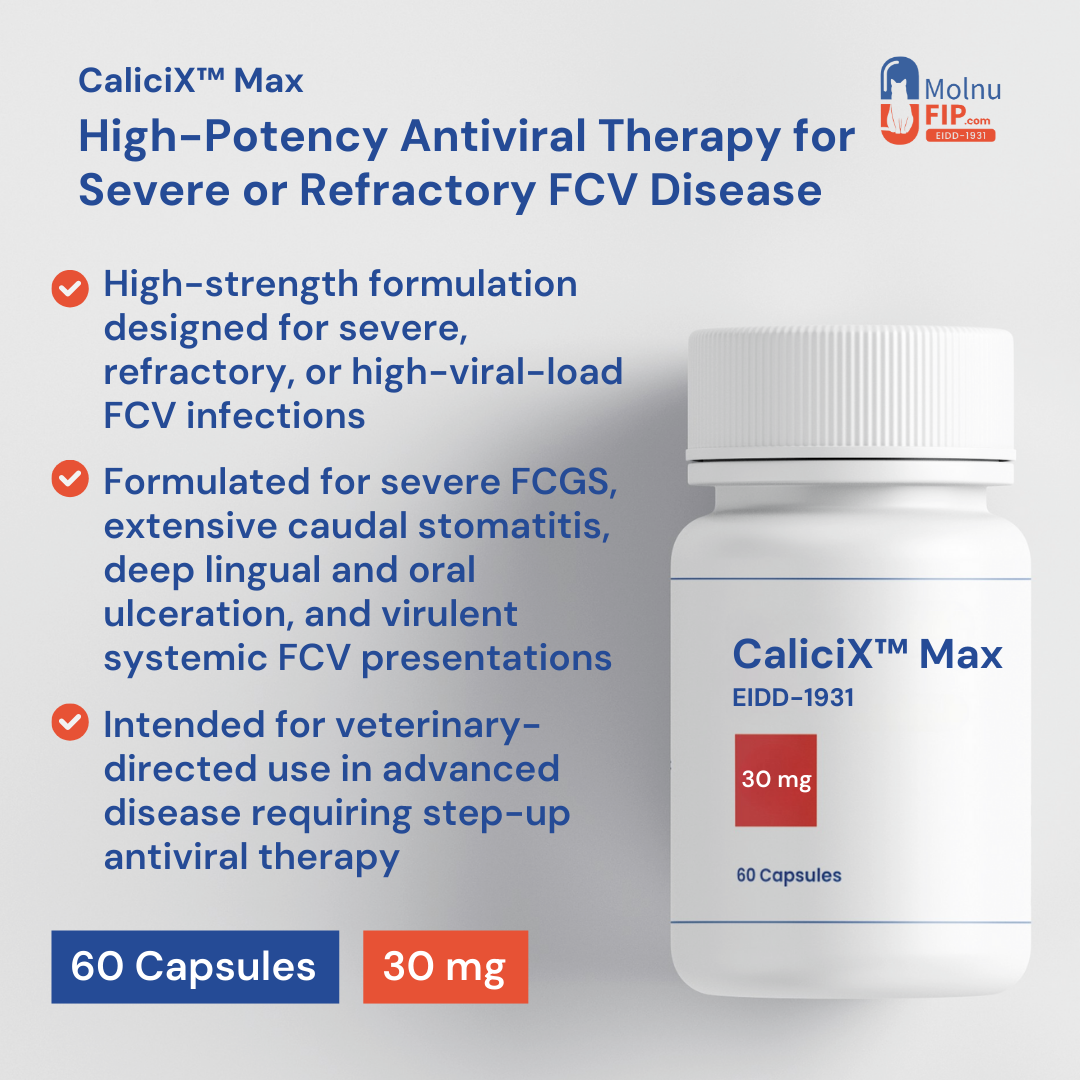

CaliciX™ Maxは、15 mg の標準用量療法では不十分な、重度、難治性、または高ウイルス量のネコカリシウイルス (FCV) 感染症を患っている猫のために処方された高強度全身抗ウイルスカプセルです。

各カプセルには、進行した病状における全身のウイルス抑制を目的として設計された、モルヌピラビルの活性抗ウイルス代謝物である純粋な EIDD-1931 30 mg が含まれています。

この製剤は、病気の重症度、体重、または従来の治療に対する反応が悪いために、より高い抗ウイルス曝露を必要とする猫に獣医の監督下で使用することを目的としています。

 CaliciX™ Max は、次のような重度の FCV 関連疾患の治療をサポートするように設計されています。
重度の口腔および中咽頭疾患。
- 重度の猫慢性歯肉口内炎(FCGS)
- 広範囲の尾部口腔炎症を伴う尾部口内炎
- 抜歯に反応しない潰瘍性口内炎
- 深舌潰瘍(ウイルス性舌炎)
- 多発性頬部、唇側、口蓋潰瘍
これらの症状の特徴は次のとおりです。
- 激しい口腔痛
- 多量のよだれ(唾液分泌異常)
- 食べることや飲み込むことが難しい(嚥下障害)
- 体重減少と悪液質
- 持続的な口臭と口腔内出血
全身性および毒性FCV感染症
CaliciX™ Max は、次のような全身ウイルス負荷量が高いことが証明されている症例で考慮されることがあります。
強毒性全身性ネコカリシウイルス(VS-FCV)
FCV関連の発熱と重度の倦怠感
顔面または四肢の浮腫
跛行
肺の障害または肺炎
肝臓または膵臓の酵素の上昇
急速な臨床的悪化を伴う重度の炎症反応
難治性または再発性疾患
FCVの持続的な脱毛を伴う猫
不完全な反応を示す抜歯後FCGS
ステロイドまたは免疫抑制療法後に再発を繰り返す慢性口内炎
大型または肥満の猫では、1回あたりの抗ウイルス薬の曝露量を増やす必要がある
なぜ高強度CaliciXなのか?
CaliciX の EIDD-1931 は、モルヌピラビルの活性抗ウイルス剤であり、次の効果を示します。
プロドラッグよりも本質的に高い抗ウイルス効力
代謝変換に依存せずに予測可能な全身曝露
カリシウイルスを含むRNAウイルスに対する幅広い活性
重度の FCV 疾患では、以下の理由からより高い全身濃度が必要になる場合があります。
ウイルスの複製を急速に減らす
進行中の粘膜および全身のウイルス障害を抑制する
炎症や痛みがひどい猫の回復をサポート
30 mg の強度により、獣医師は投与量あたりのカプセル数を減らしてこれらの目標を達成することができ、精度、コンプライアンス、および治療の実現可能性が向上します。
重症および大型猫向けに設計
CaliciX™ Max は特に次の用途に適しています:
重症の体重5kg以上の猫
4~6 mg/kg BIDを超える投与量を必要とする患者
複数の15mgカプセルが必要となる状況
この強みは、正確な投与量管理を維持しながら、抗ウイルス療法の強化をサポートします。
最も必要な時に、的確な抗ウイルス療法を。CaliciX™ Maxは、CaliciX™抗ウイルス剤シリーズの中で最も強力な選択肢であり、獣医師にとって最も困難なカリシウイルス感染症に対する全身性抗ウイルスツールとなります。標準投与量では効果が不十分な場合、CaliciX™ Maxは、重症FCV感染症の猫の症状の安定化、回復、そして生活の質の向上をサポートするよう設計された、制御された高強度の抗ウイルス剤です。
CaliciX™ Max – 重症猫カリシウイルス感染症に対する高効力EIDD-1931
1. Active Ingredient
-
EIDD-1931 (β-D-N4-hydroxycytidine) – 30 mg
-
Active antiviral metabolite of molnupiravir (EIDD-2801)
-
RNA-dependent RNA polymerase (RdRp) mutagenic nucleoside analogue
2. Pharmacological Class
-
Direct-acting antiviral (DAA)
-
Broad-spectrum RNA virus inhibitor
-
Viral error catastrophe inducer
Active Ingredient
- EIDD-1931 (β-D-N4-hydroxycytidine) – 30 mg per capsule
- Pharmacologically equivalent to ~133 mg molnupiravir (EIDD-2801)
3. Mechanism of Action
EIDD-1931 is intracellularly phosphorylated to its active triphosphate form and incorporated into viral RNA during replication. This results in:
-
Accumulation of transition mutations
-
Loss of viral genome integrity
-
Suppression of productive viral replication
This mechanism is host-independent, does not rely on viral proteases, and has a high genetic barrier to resistance.
4. Indications
CaliciX™ Max is intended for use in cats with severe or refractory feline calicivirus (FCV)–associated disease, including:
Severe Oral Disease
-
Severe Feline Chronic Gingivostomatitis (FCGS)
-
Caudal stomatitis with extensive caudal oral inflammation
-
Ulcerative stomatitis unresponsive to dental extractions
-
Viral glossitis with deep lingual ulceration
-
Multifocal buccal, labial, and palatal ulcers
Systemic & Virulent FCV Disease
-
Virulent systemic feline calicivirus (VS-FCV)
-
FCV-associated fever and lethargy
-
Facial and limb edema
-
Lameness
-
Pneumonia or respiratory compromise
-
Hepatic or pancreatic inflammatory involvement
Refractory / High-Risk Cases
-
Post-extraction FCGS with incomplete response
-
Persistent FCV shedding
-
Relapsing disease following corticosteroids or immunosuppressants
-
Large-body-weight cats requiring higher antiviral exposure
5. Clinical Signs Targeted
-
Severe oral pain
-
Drooling (ptyalism)
-
Dysphagia and anorexia
-
Oral bleeding and ulceration
-
Halitosis
-
Weight loss and cachexia
-
Fever and systemic inflammation
6. Dosage & Administration
Recommended Systemic Dosing (Veterinary-Directed)
Administration: Oral
Frequency: Twice daily (q12h)
Standard High-Dose Range: Above 6 mg/kg BID
7. Pharmacokinetics
-
Good oral bioavailability
-
Rapid systemic absorption
-
Intracellular activation independent of host viral enzymes
-
Distribution into oral mucosa, salivary tissues, and inflamed tissues
-
Predictable exposure without reliance on prodrug conversion
Note: Formal feline PK studies for EIDD-1931 are ongoing; dosing is based on translational data and clinical experience.
8. Safety & Precautions
Contraindications
-
Pregnancy or breeding animals
-
Known hypersensitivity to nucleoside analogues
Use With Caution
-
Hepatic impairment
-
Renal disease (especially if combined with NSAIDs)
-
Long-term use beyond 12 weeks without monitoring
Monitoring Recommendations
-
CBC every 2–4 weeks during prolonged therapy
-
Liver enzymes (ALT/AST) if combined with other systemic drugs
-
Body weight and appetite monitoring
Potential Adverse Effects
-
Mild gastrointestinal upset
-
Transient lethargy
-
Dose-dependent effects with prolonged exposure
9. Drug Interactions
-
No known major CYP-mediated interactions
-
Compatible with:
-
Analgesics (e.g., buprenorphine)
-
NSAIDs (with renal monitoring)
-
Antibiotics for secondary infection
-
Supportive oral care
-
10. Regulatory Status
-
Not currently licensed for feline use
-
Intended for off-label veterinary application under professional supervision
-
Use requires informed consent from the animal owner
11. Storage
-
Store below 25 °C
-
Protect from moisture and light
-
Keep in original packaging until use
-